
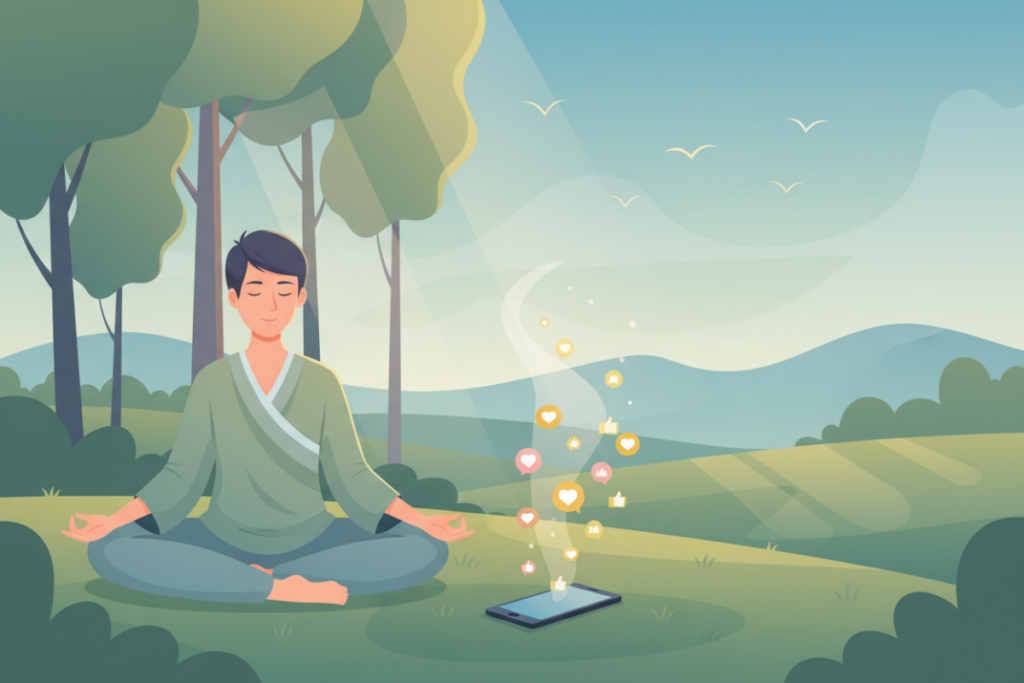
The Life-Changing Impact of Social Media Detox on Mental Well-being 🧠✨
Table of Contents 📋
• What Is a Social Media Detox and Why Does It Matter?
• The Hidden Mental Health Costs of Constant Scrolling
• Amazing Benefits of Taking a Social Media Break
• How to Start Your Own Social Media Detox Journey
• Real-Life Success Stories and Research Findings
• Making Your Detox Sustainable for Long-Term Wellness
• Frequently Asked Questions
Have you ever found yourself mindlessly scrolling through Instagram at 2 AM, comparing your life to perfectly curated feeds? Or maybe you’ve noticed that familiar pang of anxiety when you can’t find your phone? You’re definitely not alone. In our hyper-connected world, millions of people are discovering the transformative power of stepping away from social media – even temporarily – to reclaim their mental peace.
A social media detox isn’t about becoming a digital hermit forever. It’s about creating intentional space between you and the endless stream of notifications, comparisons, and information overload that can quietly chip away at your mental well-being. Let’s dive into how taking this brave step can genuinely change your life for the better.
What Is a Social Media Detox and Why Does It Matter? 🤔
Think of a social media detox as a mental reset button. It’s a deliberate period where you step away from platforms like Facebook, Instagram, TikTok, Twitter, and others to give your mind a chance to breathe. This break can last anywhere from 24 hours to several months – whatever feels right for your situation.

But why is this even necessary? Well, consider this: the average person checks their phone 96 times per day. That’s once every 10 minutes during waking hours! Each time we open these apps, our brains get hit with a cocktail of dopamine, cortisol, and other chemicals that can create an addictive cycle.
The constant stream of information, opinions, and carefully crafted highlight reels can leave us feeling overwhelmed, inadequate, or disconnected from our own lives. A detox helps break this cycle and gives us perspective on how these platforms truly affect our daily mood and mental state.
The Hidden Mental Health Costs of Constant Scrolling 😰
Let’s get real about what excessive social media use can do to our mental health. Research from the University of Pennsylvania found that limiting social media use to just 30 minutes per day for one week led to reduced loneliness and depression. But what exactly happens when we’re constantly plugged in?
Comparison Trap: Social media feeds us an endless buffet of other people’s highlight reels. That vacation photo, promotion announcement, or perfect family dinner can trigger feelings of inadequacy about our own lives. We forget that we’re comparing our behind-the-scenes reality to someone else’s carefully curated performance.
Anxiety and FOMO: The fear of missing out is real, and social media amplifies it. Every story, post, or event we see can make us feel like we’re not doing enough, not invited enough, or not living our best life. This constant state of comparison can trigger genuine anxiety symptoms.
Sleep Disruption: The blue light from screens messes with our natural sleep cycles, but it’s not just the light. The mental stimulation from scrolling through dramatic posts, news updates, or engaging content can keep our minds racing when we should be winding down.
Attention Fragmentation: Social media trains our brains to crave quick hits of information. This can make it harder to focus on single tasks, enjoy quiet moments, or engage in deep, meaningful activities that actually nourish our souls.
Amazing Benefits of Taking a Social Media Break 🌟
Now for the exciting part – what happens when you give yourself permission to step away? The benefits often start showing up faster than you might expect.
Improved Sleep Quality 😴: Without the stimulation of endless scrolling before bed, many people report falling asleep faster and experiencing more restful sleep. Your brain gets a chance to properly wind down without processing a constant stream of information.
Enhanced Real-World Connections 💕: When you’re not documenting every moment for social media, you can be fully present with friends and family. Conversations become deeper, experiences feel richer, and relationships often strengthen when you’re not viewing them through the lens of “how will this look online?”
Increased Productivity and Focus 🎯: Without the constant ping of notifications, your brain can settle into longer periods of concentrated work. Many people discover they can complete tasks faster and with better quality when they’re not constantly switching between work and social media.
Better Self-Esteem and Body Image: Stepping away from the constant barrage of filtered photos and lifestyle comparisons gives your self-perception a chance to reset. You start appreciating your own life, body, and achievements without the distortion of social comparison.
Rediscovered Hobbies and Interests 🎨: Amazing things happen when you have extra time on your hands! People often rediscover old passions, pick up new hobbies, read more books, or engage in creative activities they’d forgotten they loved.
How to Start Your Own Social Media Detox Journey 🚀
Ready to give it a try? Here’s how to set yourself up for success without going cold turkey and shocking your system.
Start Small and Build Up: Begin with a 24-hour detox over the weekend. If that feels good, try a week. There’s no rule that says you have to quit everything forever – this is about finding what works for your mental health.
Delete Apps, Don’t Just Log Out: Make it slightly inconvenient to access social media by removing apps from your phone. You can always reinstall them later, but this extra step helps break the automatic habit of opening these apps.
Find Replacement Activities: Nature abhors a vacuum, and so does your brain. Plan specific activities to fill the time you’d normally spend scrolling. This might be reading, exercising, cooking, calling a friend, or working on a creative project.
Tell Your Support System: Let close friends and family know about your detox. They can help hold you accountable and won’t worry if you’re not responding to social media messages immediately.
Keep a Journal 📝: Document how you’re feeling during your detox. Note changes in your mood, sleep, productivity, and overall well-being. This creates a powerful record of the benefits you’re experiencing.
Real-Life Success Stories and Research Findings 📊
Sarah, a 28-year-old marketing professional, tried a one-week Instagram detox after noticing she felt anxious every time she opened the app. “By day three, I realized I wasn’t constantly comparing myself to influencers,” she shares. “I started appreciating my own apartment, my own style, and my own pace of life. It was like taking off glasses I didn’t know were tinted.”
The science backs up these personal experiences. A 2019 study published in the Journal of Social and Clinical Psychology found that participants who limited their social media use to 30 minutes per day for just one week showed significant reductions in loneliness and depression compared to a control group.
Another fascinating study from the University of British Columbia discovered that people who turned off their phone notifications for just one week reported lower stress levels and improved ability to focus. The researchers noted that participants were initially worried about missing important information, but most found the opposite – they felt more in control and less scattered.
Making Your Detox Sustainable for Long-Term Wellness 🌱
The goal isn’t to never use social media again (unless that’s what you want!). It’s about developing a healthier, more intentional relationship with these platforms.
Set Specific Time Boundaries: Consider designating certain hours as social media-free zones. Many people find success with no phones during meals, an hour before bed, or first thing in the morning.
Curate Your Feeds Mindfully: When you do return to social media, be ruthless about unfollowing accounts that make you feel bad about yourself. Follow accounts that inspire, educate, or genuinely bring joy to your life.
Practice the “Phone in Another Room” Rule: Especially during activities that matter to you – work, family time, hobbies – keep your phone physically out of reach to avoid the temptation to check it.
Regular Mini-Detoxes: Consider making mini-detoxes a regular part of your routine. Maybe it’s one day per week or one weekend per month. Regular breaks help prevent the buildup of social media fatigue.
Remember, this journey is deeply personal. What works for your friend might not work for you, and that’s completely okay. The key is paying attention to how different levels of social media use affect your mental well-being and adjusting accordingly.
Taking a social media detox isn’t about being anti-technology or rejecting modern communication. It’s about reclaiming your mental space, reducing anxiety, and reconnecting with the things that truly matter in your life. Whether you try it for a day, a week, or longer, you might be surprised by how much lighter and more present you feel when you give your mind a break from the endless scroll.
Your mental well-being is worth the experiment. Why not start today? 💪✨
Frequently Asked Questions 🙋♀️
How long should my first social media detox last?
Start with what feels manageable – even 24 hours can provide valuable insights. Many people find a week-long detox gives them enough time to notice real changes in their mood and habits without feeling overwhelmed by the commitment.
What if I need social media for work or staying in touch with family?
You can customize your detox to fit your life! Consider taking a break from personal browsing while keeping necessary professional accounts active, or use alternative communication methods like texting or calling family members during your detox period.
Will I lose all my progress if I go back to using social media after my detox?
Not at all! Think of your detox as building awareness and new habits rather than a permanent solution. Most people find they naturally use social media more mindfully after experiencing life without constant connectivity, even if they return to regular use.
What should I do when I feel the urge to check social media during my detox?
Have a replacement activity ready! This might be taking three deep breaths, going for a short walk, texting a real friend, or engaging in a hobby you enjoy. The urge usually passes within a few minutes if you can redirect your attention.
Is it normal to feel anxious or FOMO during a social media detox?
Absolutely! These feelings are completely normal and often indicate how much mental space social media was occupying in your life. The anxiety typically decreases after the first few days as you adjust to being less connected to the constant stream of information and updates.