
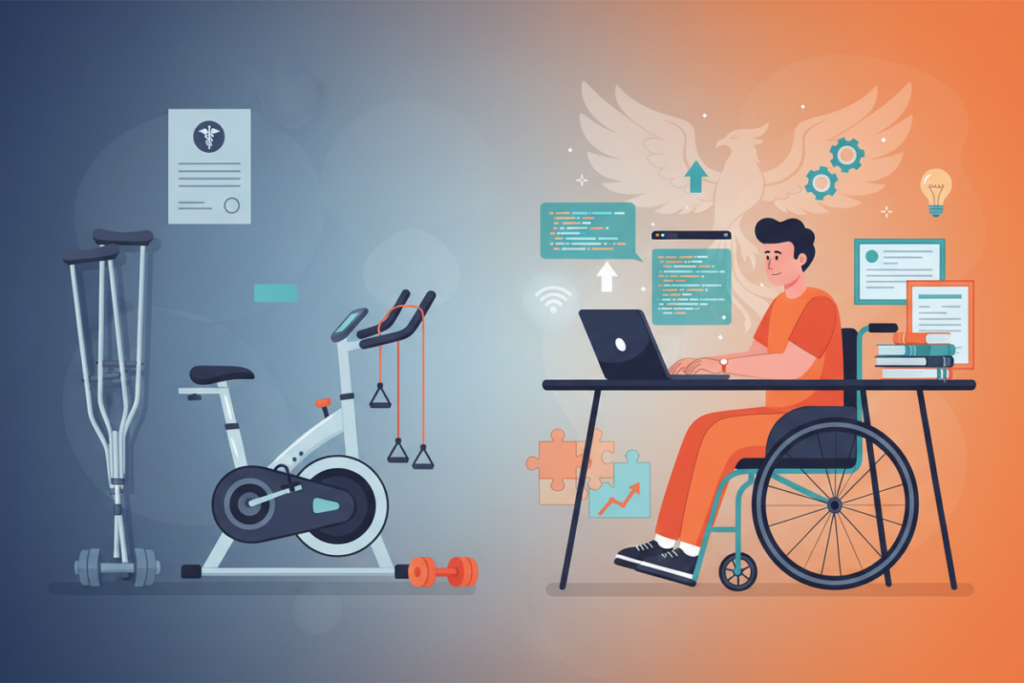
🚀 Reskilling for the Future: Transforming a Smashed Pelvis Setback into a New Career Path
Life has a funny way of throwing curveballs when you least expect them. One moment you’re climbing the corporate ladder or thriving in your trade, and the next, you’re staring at X-rays showing a shattered pelvis that changes everything. But here’s the thing about setbacks – they don’t have to be endings. Sometimes, they’re just unexpected beginnings in disguise. 💪
If you’re reading this while recovering from a serious injury or supporting someone who is, know that this journey from physical setback to career transformation isn’t just possible – it’s happening every day. Let’s explore how to turn what feels like a career-ending injury into the catalyst for your most fulfilling professional chapter yet.
📋 Table of Contents
🎯 Understanding the Emotional Journey of Career-Changing Injuries
🧠 Assessing Your Skills and Discovering Hidden Talents
💻 Digital Career Paths That Don’t Require Physical Demands
📚 Reskilling Resources and Support Systems
🌟 Success Stories: Real People, Real Transformations
🛠️ Creating Your Personal Reskilling Action Plan
❓ Frequently Asked Questions
🎯 Understanding the Emotional Journey of Career-Changing Injuries
Let’s be real for a moment – dealing with a serious injury like a smashed pelvis isn’t just about the physical pain. The emotional rollercoaster can be just as challenging, especially when your injury affects your ability to continue in your current career path.

Whether you were a construction worker, nurse, retail manager, or athlete, suddenly being unable to perform the physical demands of your job can feel like losing your identity. That’s completely normal, and it’s okay to grieve this loss. 💔
The key is recognizing that while your body may have limitations now, your mind, creativity, and years of experience remain intact – and these are incredibly valuable assets in today’s knowledge-based economy.
🧠 Assessing Your Skills and Discovering Hidden Talents
Here’s where the magic begins. That construction foreman who managed crews and coordinated complex projects? Those are project management skills that translate beautifully to remote work. The nurse who educated patients and families? That’s training and communication expertise that countless industries need.
Start by making a comprehensive list of your transferable skills:
🔹 Leadership and Management: Did you supervise teams, train new employees, or coordinate schedules?
🔹 Problem-Solving: Were you the go-to person when things went wrong?
🔹 Communication: Did you interact with customers, explain complex processes, or write reports?
🔹 Technical Knowledge: What industry-specific knowledge do you have that others might need to learn?
Don’t underestimate these skills – they’re gold in the right context! 🏆
💻 Digital Career Paths That Don’t Require Physical Demands
The digital revolution has created countless opportunities for careers that can be performed from anywhere, with minimal physical demands. Here are some promising paths to consider:
🖥️ Technology and Digital Services
Web development, digital marketing, cybersecurity, and data analysis are booming fields with excellent remote work opportunities. Many successful professionals in these areas are self-taught or completed short-term certification programs.
📝 Content Creation and Consulting
Your industry experience could be the foundation for consulting, technical writing, online course creation, or industry blogging. People pay good money for expertise, and you’ve got years of it!
🎓 Education and Training
Online tutoring, corporate training development, and educational content creation are growing rapidly. Your real-world experience gives you credibility that fresh graduates simply can’t match.
💼 Virtual Business Services
Project management, virtual assistance, bookkeeping, and customer service roles can often be performed entirely remotely with flexible schedules.
📚 Reskilling Resources and Support Systems
The good news? There are more resources available for career changers than ever before, and many are specifically designed for people with disabilities or those recovering from injuries.
🆓 Free Learning Platforms:
Coursera, edX, Khan Academy, and YouTube offer thousands of courses on virtually every topic imaginable. Start with beginner-friendly courses in areas that interest you.
💰 Financial Support:
Vocational rehabilitation services, disability grants, and workforce development programs can help cover training costs. Don’t be afraid to ask – these programs exist to help people exactly like you.
🤝 Community Support:
Join online communities for career changers and people with disabilities. LinkedIn groups, Reddit communities, and Facebook groups can provide encouragement, advice, and even job leads.
🌟 Success Stories: Real People, Real Transformations
Meet Sarah, a former restaurant manager who suffered a severe back injury. Unable to stand for long periods, she thought her career was over. Today, she runs a successful social media marketing agency, helping restaurants improve their online presence. Her industry knowledge gave her an edge that pure marketers couldn’t match. 🎉
Then there’s Mike, a construction supervisor whose leg injury ended his days on job sites. He channeled his project management skills into becoming a certified project management professional (PMP) and now manages construction projects remotely for multiple companies, earning more than he ever did in the field.
These aren’t unicorn stories – they’re becoming increasingly common as more people discover that career setbacks can become career breakthroughs. ✨
🛠️ Creating Your Personal Reskilling Action Plan
Ready to start your transformation? Here’s a practical roadmap:
Week 1-2: Self-Assessment
Complete a thorough skills inventory and research career options that align with your interests and abilities.
Week 3-4: Exploration
Take free introductory courses in 2-3 areas that interest you. This will help you identify what resonates with you.
Month 2: Skill Building
Choose one area to focus on and commit to a more comprehensive learning program. Set realistic daily or weekly learning goals.
Month 3-6: Practice and Portfolio
Start building a portfolio of work, even if it’s just practice projects. Volunteer your new skills for nonprofit organizations or friends’ businesses.
Month 6+: Job Search and Networking
Begin applying for entry-level positions in your new field while continuing to build your skills and network.
Remember, this isn’t a race – it’s a marathon. Be patient with yourself and celebrate small wins along the way! 🎊
🔄 Conclusion: Your Setback Is Your Setup
A smashed pelvis or any serious injury that derails your career doesn’t have to define your future – it can redirect it toward something even better. The combination of your existing experience, new digital skills, and the determination that got you through your recovery creates a powerful foundation for career success.
The world needs people who understand resilience, who’ve faced real challenges, and who bring both wisdom and fresh perspectives to their work. That’s exactly who you are. 🌟
Your injury may have closed one door, but it’s also opened your eyes to possibilities you never considered before. The question isn’t whether you can build a new career – it’s which amazing direction you’ll choose to go.
❓ Frequently Asked Questions
How long does it typically take to reskill for a new career after an injury?
The timeline varies greatly depending on your chosen field and learning pace, but most people see meaningful progress within 6-12 months. Some digital skills can be learned in a few months, while others may take a year or more to master professionally.
Will employers discriminate against me because of my injury or disability?
While discrimination unfortunately exists, many employers are actively seeking diverse talent and value the unique perspectives that people with disabilities bring. Focus on highlighting your skills and what you can contribute rather than your limitations.
Can I really earn a good living in a new career after starting over?
Absolutely! Many people who’ve made career transitions after injuries report earning equal or higher incomes in their new fields, especially in technology and consulting roles where experience and skills are highly valued.
What if I’m not tech-savvy enough for digital careers?
Don’t let this worry stop you! Most successful career changers weren’t tech experts when they started. Begin with user-friendly platforms and basic courses – you’ll be surprised how quickly you adapt.
How do I stay motivated during the reskilling process while dealing with injury recovery?
Set small, achievable daily goals and connect with others on similar journeys. Remember that learning new skills can actually be therapeutic and help you regain confidence. Consider your reskilling time as an investment in your future self! 💪