
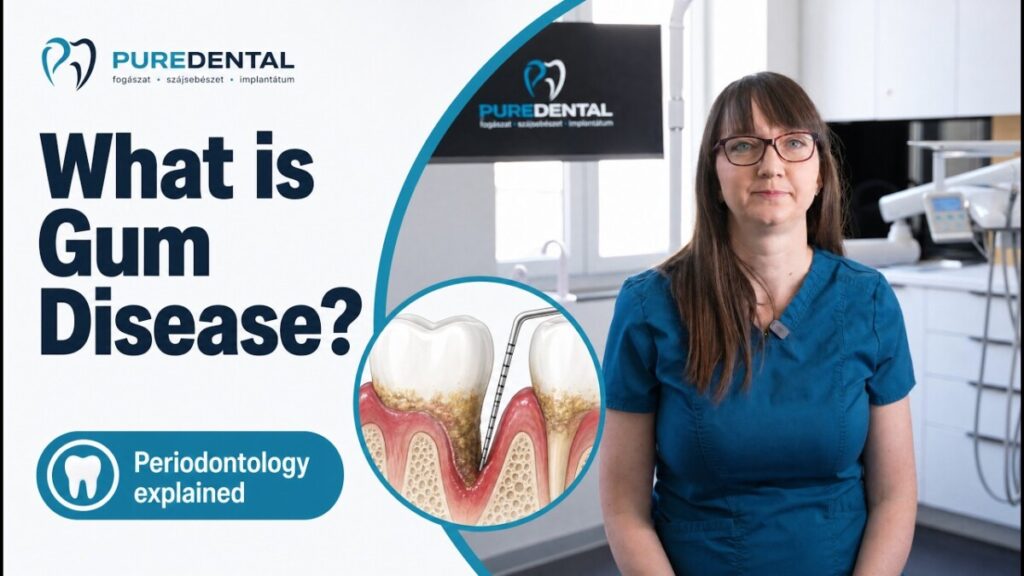
Periodontal disease is one of the most common yet most underestimated dental problems. It’s important to understand that it doesn’t primarily affect the tooth, but the surrounding supporting tissues, the gums, the bone, and the connective fibers. The process usually starts with simple gum inflammation, most commonly caused by bacterial plaque and tartar buildup on the tooth surfaces and under the gums. Several factors can aggravate this process. These include, for example, poor oral hygiene, genetic predisposition, smoking, certain systemic diseases like diabetes or even stress, but also improperly made dental prosthetics that are impossible to clean properly.
If gingivitis remains untreated, the inflammation spreads deeper and affects the bone as well. This is when we talk about periodontal disease or periodontitis. The most important symptoms include bleeding gums, bad breath, and changes in the condition of the gums. Initially, they can be red, swollen, and sensitive. Later, however, as the inflammation progresses, the gums may recede and the tooth necks can become exposed.
In advanced stages, the teeth may become loose. What’s truly deceptive is that this inflammation often occurs without pain. So many people only see a doctor when it’s too late and serious bone loss has occurred. Yet, there are signs when it’s worth seeing a dentist immediately, if your gums bleed regularly, are swollen or sensitive, if you experience bad breath, or if you feel that your teeth are loose. The key to prevention is regular, thorough cleaning, and at least one dental checkup per year.
Besides proper home oral hygiene, regular professional tartar removal is essential as tartar often goes unnoticed and cannot be removed with home methods. It’s also important to clear up some common misconceptions. Periodontal disease is not a natural part of aging and it’s not normal for gums to bleed during brushing either. This is always a sign of inflammation that needs to be treated. Periodontal disease can lead not only to tooth loss but also affects the entire body.
Since it’s a chronic inflammatory condition, it can also cause focal infections. The most important thing is to recognize it as soon as possible because then it’s more treatable and controllable. With a thorough periodontal examination, we get an accurate picture of the condition and can stop the inflammatory process in time.