How to Use Reflexology for Pain and Stress Relief: Your Complete Guide 🌟
Table of Contents 📋
• What is Reflexology and How Does It Work? 🤔
• The Science Behind Reflexology for Pain Relief 🧬
• Essential Reflexology Techniques for Beginners 👣
• Targeting Specific Pain Points Through Foot Reflexology 🎯
• Hand Reflexology for Quick Stress Relief 🤲
• Creating Your Personal Reflexology Routine 📅
• When to Seek Professional Reflexology Treatment 👨⚕️
• Safety Tips and Precautions ⚠️
• Frequently Asked Questions ❓
Have you ever noticed how a good foot massage can instantly melt away your stress? There’s actually ancient wisdom behind that feeling of relief. Reflexology, a therapeutic practice that’s been around for thousands of years, might just be the natural pain and stress relief solution you’ve been searching for. I’ve personally experienced the incredible benefits of reflexology, and I’m excited to share this journey with you!

Whether you’re dealing with chronic headaches, back pain, or just the everyday stress of modern life, reflexology offers a gentle, non-invasive approach to healing that you can even practice at home. Let’s dive into this fascinating world of pressure points and discover how your feet and hands hold the key to better health. 🗝️
What is Reflexology and How Does It Work? 🤔
Reflexology is based on the principle that specific points on your feet, hands, and ears correspond to different organs and systems throughout your body. Think of these areas as a detailed map of your entire body – pretty amazing, right? When you apply pressure to these reflex points, you’re essentially sending signals through your nervous system to promote healing and relaxation in the corresponding body parts.

The theory behind reflexology suggests that energy pathways, similar to those recognized in traditional Chinese medicine, run throughout our bodies. When these pathways become blocked due to stress, illness, or injury, applying pressure to the corresponding reflex points can help restore the natural flow of energy and promote the body’s innate healing abilities.
What I love most about reflexology is its accessibility. Unlike some alternative therapies that require expensive equipment or extensive training, you can start experiencing the benefits of reflexology right now, using nothing more than your own hands! 🙌
The Science Behind Reflexology for Pain Relief 🧬
While reflexology has ancient roots, modern research is beginning to validate what practitioners have known for centuries. Studies have shown that reflexology can effectively reduce pain, lower stress hormones, and improve overall well-being. The mechanism likely involves the release of endorphins – your body’s natural “feel-good” chemicals – and the activation of the parasympathetic nervous system, which promotes relaxation and healing.
Research published in various medical journals has demonstrated reflexology’s effectiveness for conditions including:
• Chronic pain conditions 💪
• Anxiety and depression 🧠
• Headaches and migraines 🤕
• Digestive issues 🍃
• Sleep disorders 😴
• High blood pressure 💗
The beauty of reflexology lies in its holistic approach. Rather than just masking symptoms, it works to address the root causes of discomfort by promoting your body’s natural healing processes.
Essential Reflexology Techniques for Beginners 👣
Getting started with reflexology doesn’t require any special equipment – just your hands and a willingness to learn! Here are the fundamental techniques that form the foundation of effective reflexology practice:
The Thumb Walking Technique 👍
This is the most commonly used reflexology technique. Place your thumb on the reflex point and use the edge of your thumb to apply steady pressure while “walking” across the area in small steps. Think of it like a caterpillar moving – bend and straighten your thumb joint to create a rolling motion.
Finger Walking Technique 👆
Similar to thumb walking, but using your index finger instead. This technique is particularly useful for smaller, more precise areas and when working on your own hands.
Rotation and Pressure 🔄
Place your thumb on a specific reflex point and apply gentle pressure while making small circular motions. This technique is excellent for targeting specific areas of tension or discomfort.
Hook and Backup Technique 🪝
This advanced technique involves placing your thumb on a point, applying pressure, and then pulling back slightly while maintaining contact. It’s particularly effective for deeper reflex points.
Targeting Specific Pain Points Through Foot Reflexology 🎯
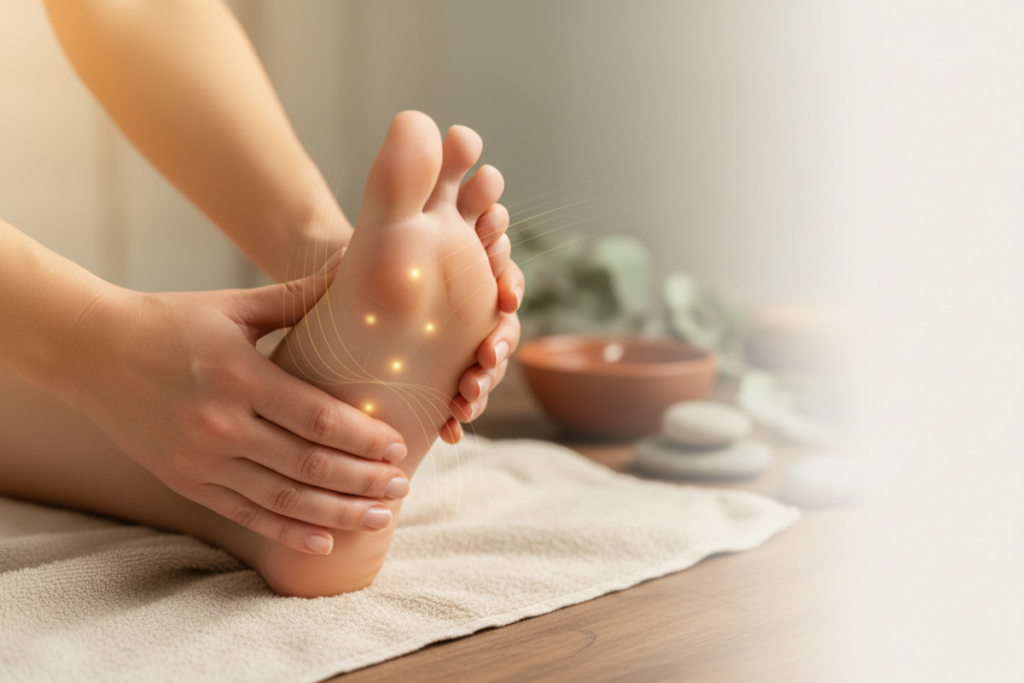
Your feet are like a treasure map of your entire body! Here’s how to target common pain and stress areas through foot reflexology:
Headache and Migraine Relief 🤕
Focus on the big toe, which corresponds to your head and brain. Apply gentle pressure to the tip and pad of your big toe using the thumb walking technique. Spend extra time on any tender spots – these often indicate areas that need attention.
Back Pain Relief 🔙
The inner edge of your foot, from the big toe down to the heel, represents your spine. Use your thumb to walk along this entire area, paying special attention to any areas that feel tender or tight. For lower back pain, focus on the area near your heel.
Neck and Shoulder Tension 💆♀️
The base of your toes and the area just below them correspond to your neck and shoulders. Gently massage this area using circular motions and thumb walking techniques.
Digestive Issues 🍃
The arch of your foot represents your digestive organs. Apply gentle pressure across the entire arch area, working from the inner edge toward the outer edge of your foot.
General Stress Relief 🌈
The solar plexus point, located in the soft spot just below the ball of your foot, is considered the “stress relief” point. Apply gentle pressure here while taking deep breaths for instant relaxation.
Hand Reflexology for Quick Stress Relief 🤲
When you can’t remove your shoes for foot reflexology, your hands offer an equally powerful alternative! Hand reflexology is perfect for those moments when you need quick stress relief – during a work break, while commuting, or anytime you need a moment of calm.
The Stress-Relief Squeeze 🤝
Locate the web of skin between your thumb and index finger. This point, known as LI4 in acupuncture, is excellent for stress relief and headaches. Apply firm pressure for 30-60 seconds while breathing deeply.
Heart and Lung Points 💓
The fleshy pad below your ring finger corresponds to your heart and lungs. Gentle circular massage here can help with anxiety and breathing difficulties.
Digestive Support 🌿
The center of your palm represents your digestive system. Apply gentle pressure with your opposite thumb, making small circles to promote digestive health and reduce stomach tension.
Head and Neck Relief 🧠
Your thumb represents your head and neck. Massage the entire thumb, paying special attention to the tip and the joint areas for headache and neck tension relief.
Creating Your Personal Reflexology Routine 📅
Consistency is key when it comes to experiencing the full benefits of reflexology. Here’s how to create a sustainable practice that fits into your daily life:
Morning Energizer Routine ☀️
Start your day with a 5-10 minute foot reflexology session focusing on energy points. Work the tips of all your toes to stimulate your head and brain, then massage the center of your foot for digestive support.
Midday Stress Buster 🕐
Keep a quick hand reflexology routine in your back pocket for those stressful moments. Spend 2-3 minutes massaging the stress points between your thumb and index finger, followed by gentle pressure on your palm’s center.
Evening Wind-Down Ritual 🌙
End your day with a relaxing foot reflexology session. Focus on the solar plexus point for stress relief, and work any areas that correspond to parts of your body that felt tense during the day.
Weekly Deep Sessions 🗓️
Set aside 20-30 minutes once or twice a week for a comprehensive reflexology session. Work through all the major reflex points systematically, spending extra time on areas that feel particularly tender or tight.
When to Seek Professional Reflexology Treatment 👨⚕️
While self-administered reflexology is incredibly beneficial, there are times when professional treatment might be more appropriate:
• When dealing with chronic pain conditions that haven’t responded to self-treatment 🏥
• If you have limited mobility that makes self-treatment difficult 🦽
• For complex health issues that require a more comprehensive approach 🔬
• When you want to learn proper techniques from an experienced practitioner 🎓
• If you’re pregnant or have certain health conditions that require professional guidance 🤰
A certified reflexologist can provide a more thorough treatment and teach you advanced techniques tailored to your specific needs. They can also help you understand which points to focus on for your particular health concerns.
Safety Tips and Precautions ⚠️
Reflexology is generally very safe, but there are a few important considerations to keep in mind:
Start Gently 🕊️
Begin with light pressure and gradually increase as your body becomes accustomed to the treatment. Some tenderness is normal, but you should never experience sharp or severe pain.
Stay Hydrated 💧
Drink plenty of water after reflexology sessions to help your body flush out toxins that may be released during treatment.
Listen to Your Body 👂
If an area feels particularly sensitive or painful, spend less time on it initially and gradually increase as tolerance improves.
Avoid During Certain Conditions 🚫
Consult with a healthcare provider before using reflexology if you have:
• Blood clots or circulation disorders
• Foot injuries or infections
• Pregnancy (especially first trimester)
• Heart conditions
• Diabetes with nerve damage
Know When to Stop 🛑
If you experience dizziness, nausea, or any unusual symptoms during or after reflexology, stop the treatment and consult with a healthcare professional.
Reflexology offers a beautiful, natural pathway to pain relief and stress reduction that’s literally at your fingertips! The journey of learning reflexology is deeply personal – what works for one person might need adjustment for another. I encourage you to start slowly, pay attention to your body’s responses, and gradually build your practice.
Remember, reflexology isn’t a magic cure-all, but it’s a powerful tool that can complement your existing health and wellness routine. The best part? The more you practice, the more attuned you’ll become to your body’s needs and responses. You might be surprised at how much relief you can provide for yourself with just a few minutes of mindful pressure and touch each day! 🌟
Whether you’re dealing with chronic pain, everyday stress, or simply want to add a nurturing self-care practice to your routine, reflexology offers a gentle, accessible way to support your body’s natural healing abilities. Give it a try – your feet (and the rest of your body) will thank you! 🙏
Frequently Asked Questions ❓
How long does it take to feel the benefits of reflexology?
Many people experience immediate relaxation and stress relief during their first session, but for more significant benefits like pain reduction, you might need to practice consistently for 2-4 weeks. Some chronic conditions may require longer to show improvement. The key is consistency – even 5-10 minutes daily can make a meaningful difference over time! 🕐
Can I do reflexology on myself, or do I need to see a professional?
Absolutely, you can practice reflexology on yourself! In fact, self-reflexology is one of the most accessible forms of natural healing. While professional treatments can be more comprehensive and relaxing, self-administered reflexology is highly effective for daily stress management and minor pain relief. Start with simple techniques and gradually build your skills. 🏠
Is it normal for my feet to feel tender or sore during reflexology?
Yes, some tenderness is completely normal, especially when you first start practicing reflexology or when working on areas that correspond to stressed or imbalanced parts of your body. However, the pressure should never be painful. If an area feels particularly sensitive, use lighter pressure and shorter sessions until the sensitivity decreases. Think of tenderness as your body’s way of saying “pay attention here!” 👣
How often should I practice reflexology for the best results?
For general wellness and stress relief, practicing reflexology 3-4 times per week for 10-20 minutes is ideal. If you’re dealing with specific pain or health issues, daily sessions might be more beneficial. Listen to your body – some people benefit from brief daily sessions, while others prefer longer sessions a few times per week. The most important thing is finding a routine you can stick with consistently! 📅
Are there any side effects I should be aware of?
Reflexology is generally very safe with minimal side effects. Some people might experience temporary fatigue, emotional release, or mild detox symptoms like increased urination after sessions – these are actually positive signs that your body is responding to the treatment. Rarely, people might feel dizzy or nauseous, which usually indicates the pressure was too strong or the session too long. Always start gently and build up gradually! ✨